
The leading cause of kidney stones is a lack of water; they are commonly reported in people who do not drink the recommended daily amount of water. As well as complicating UTIs, research has suggested that kidney stones also increase the risk of chronic kidney disease. But if you don’t like the taste, you can enliven your drink with lemon or lime or a splash of fruit juice.
How many liters of water should a person drink in a day?

Being active is an important lifestyle choice for every member of the family. But during sports or other physical activities, your child may need additional water to prevent dehydration. For example, when taking part in sports, make sure your child drinks water before, during and after practices or games.
Home Food Safety
Dehydration-related body mass losses of more than 2% are often linked to increased tiredness and decreased attention6. Recent NIH-funded research suggests that avoiding dehydration may not be the only reason to make sure you drink enough fluids. Dr. Natalia Dmitrieva, a heart researcher at NIH, has studied the long-term effects of not drinking enough water. In one study, her team found that middle-aged people who were not adequately hydrated were more likely to develop chronic diseases. The diseases included heart failure, diabetes, chronic lung disease, and dementia.
Some of the water required by the body is obtained through foods with a high water content, such as oranges, watermelon, and spinach, but most come through drinking water and other beverages. Because your muscles hold water, less muscle mass means less water storage. Research shows that older adults have a lower percentage of total body water content compared to younger people. If your body can’t store as much water, you’ll get dehydrated more easily. Several studies found that drinking about six cups of water a day helped adults lose weight. But a study that included adolescents found that drinking a little more than eight cups learnmuscles of water a day had no effect.
Good nutrition is essential for health across the lifespan. See strategies, data, and resources to improve nutrition in states and communities. Dietary and physical activity behaviors among high school students – Youth Risk Behavior Survey, United States, 2019. March 22 is World Water Day, a day for accelerating change to solve the water and sanitation crisis. They only need about 4-8 ounces per day until they are a year old because the rest of their liquids are coming from breastmilk or formula. Kidney stones interfere with how the kidneys work and, when present, can complicate UTIs.
How much daily total water do you need?
Water is crucial for many bodily functions, such as lubricating the joints, delivering oxygen throughout the /unimeal-weight-loss-app-review-12-reasons-to-trust/ body, preventing kidney damage, and more. It’s a lot easier to get up and get a drink when your body lets you. For some older adults, physical limitations such as arthritis, joint pain or general mobility issues can make it challenging to get a glass of water. Drinking about four more cups of water a day helped diabetic patients whose blood glucose levels were elevated. If it’s colorless or light yellow, you’re well hydrated.
The role of water in disease prevention and management
A person should avoid alternating between alcohol and carbonated drinks, as these drinks can speed up the absorption of alcohol into the body. When partying, still water with ice and lemon alternated with alcoholic drinks can help prevent overconsumption of alcohol. Dehydration can lead to digestive problems, constipation, and an overly acidic stomach. This increases the risk of heartburn and stomach ulcers. To learn more about how better hydration can promote healthy aging, reach out to your primary care physician.
But avoiding dehydration isn’t just about drinking a lot, how and when you take in your fluids can make a difference, too. Follow these tips to make sure you’re getting enough water. Fortunately, you don’t have to only drink water or other beverages to stay hydrated. Prescription and over-the-counter medications can also up your risk of dehydration and loss of electrolytes. To avoid that, drink a tall glass of water every time you take drugs like diuretics, antihistamines, laxatives, antipsychotics and steroids. “Dehydration makes your skin look more dry and wrinkled, which can be improved with proper hydration,” he says.
This can also result in greater personal safety and reducing musculoskeletal disorders by reducing the need to make long or risky journeys to collect and carry water. Better water sources also mean less expenditure on health, as people are less likely to fall ill and incur medical costs and are better able to remain economically productive. Inadequate management of urban, industrial and agricultural wastewater means the drinking-water of hundreds of millions of people is dangerously contaminated or chemically polluted. Drinking an additional six cups a day of water also helped women with recurrent urinary tract infections. It reduced the number of infections and increased the amount of time between them.
It delivers oxygen throughout the body
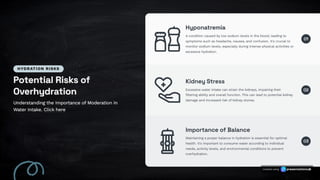
The “na” in “hyponatremia” refers to sodium’s periodic table symbol, Na+. If blood levels of sodium become hypotonic (too dilute), osmotic pressure in the extracellular compartments decreases. Remember that sodium is the primary driver of ECF volume, so its loss or insufficiency means water will flow out of the ECF, further depleting volume, and will flow into the body’s cells, causing them to swell. This becomes particularly dangerous in the brain because cell swelling there will lead to increased intracranial pressure, a dangerous condition called cerebral encephalopathy. Exercise also results in the shunting of blood to active muscles, leading to decreases in kidney filtration and urine production and making it harder for the body to counter a fluid overload. Even with Na+ supplementation, exertional hyponatremia can occur, particularly in ultra-endurance events, or those lasting longer than 18 hours.
- Food supplements must not be used as a substitute for a balanced and healthy diet/lifestyle.
- Further, the recommendations are simple and inexpensive, so barriers to improving hydration (other than the inconvenience of frequent urination) are typically low.
- Plus, illnesses such as fever and diarrhea result in additional water loss.
- But during sports or other physical activities, your child may need additional water to prevent dehydration.
- Certain groups of people, including children, the elderly, and those with chronic medical conditions, are more vulnerable to dehydration.
- Summer beckons us outdoors with promises of fun activities like sports, hiking, and beach days.
Healthy Hydration: The Science and Importance of Drinking Water
For instance, when you exercise or are active in hot weather, you sweat more and so need to drink more. But experts generally recommend drinking around 9 cups of fluids a day for women and 13 cups for men on average. In our tech-driven world, smart gadgets and apps are revolutionizing the way we approach hydration. Devices like smart water bottles can track your fluid intake and remind you to drink water through smartphone notifications or built-in alarms.
How much water should you drink?
Most people take drinking water for granted, but keeping hydrated has a huge impact on overall health. Despite how crucial water is, a significant number of people fail to consume recommended levels of fluids each day. While we may not need eight glasses, there are plenty of reasons to drink water. In fact, drinking water (either plain or in the form of other fluids or foods) is essential to your health. While not essential for the average person, timing of fluid consumption is also important for these athletes, she adds. Despite that, the mantra of drinking eight glasses of water took off, and it’s now commonplace to see people toting water bottles as they go about their daily activities.
Kidney stones
Vomiting and diarrhea can also lead to rapid water loss. Be sure to actively drink plenty of water to avoid becoming dehydrated. Summer beckons us outdoors with promises of fun activities like sports, hiking, and beach days. However, these sun-soaked pastimes also bring an increased risk of dehydration. When we’re active in the heat, our bodies lose fluids more rapidly through sweat, and if we’re not careful, this can quickly lead to dehydration.
Don’t Accept Urinary Incontinence As a ‘Normal’ Part of Aging
▪ Blood is more than 90 percent water, therefore, if water is in short supply, blood can become thicker and increase blood pressure. In severe cases, dehydration can also result in kidney failure, a potentially life-threatening outcome. Possible complications of chronic kidney failure include anemia, damage to the central nervous system, heart failure, and a compromised immune system. To function properly, all the cells and organs of the body need water. It is also used to lubricate the joints, protect the spinal cord and other sensitive tissues, regulate body temperature, and assist the passage of food through the intestines. Even if the respondents reporting low levels of water intake were obtaining enough fluid, it is likely that they would be obtaining it from sources that could potentially compromise their health in other ways.
This suggests an overstimulation of the body’s stress response system. In conjunction, pressure-sensitive receptors in blood vessels (called baroreceptors) sense the decreased blood volume and respond by triggering the release of aldosterone, a corticosteroid. Aldosterone increases Na+ reabsorption by the kidneys (and because water follows salt, this enhances water retention).
